
Friday, May 13, 2022

Friday, December 17, 2021
Throw Back Post: Snowshoeing and Being Prepared
Note: I wrote this for Snowshoeing Magazine in 2005. The "MASV" (car) has changed (a few times, actually), I have newer, but still traditional snowshoes now, and I'm over 65 as I write this. But the lesson I learned that day has stayed with me and I think it is important enough to revisit. Be Prepared whenever you visit the backcountry, because you can never predict what MIGHT happen.

I woke up to the unexpected sound of a snowplow going by the motel room, got up and looked out the window to find about four inches of new powder on my van. (By agreement with my wife, now that I am over 50, when I am solo I either stay in a motel, hostel or campground.) I switched on the TV, although the only station I would find was a translator for the Twin Cities CBS affiliate, 200 miles away. The morning weather guy went on and on about some fundraiser he and the traffic gal were involved in, but when he finally got to the state-wide radar, I could see that the bulk of the storm was past the area I was in. I got dressed and headed across the parking lot to the Gosh Dam Place (a restaurant, bar and motel/hostel on the road to the dam on Lake Winnebigoshish) for a hearty breakfast.
I woke up to the unexpected sound of a snowplow going by the motel room, got up and looked out the window to find about four inches of new powder on my van. (By agreement with my wife, now that I am over 50, when I am solo I either stay in a motel, hostel or campground.) I switched on the TV, although the only station I would find was a translator for the Twin Cities CBS affiliate, 200 miles away. The morning weather guy went on and on about some fundraiser he and the traffic gal were involved in, but when he finally got to the state-wide radar, I could see that the bulk of the storm was past the area I was in. I got dressed and headed across the parking lot to the Gosh Dam Place (a restaurant, bar and motel/hostel on the road to the dam on Lake Winnebigoshish) for a hearty breakfast.
After breakfast, I cleared the snow off my Multi-Activity Support Vehicle (an AWD Dodge mini-van.) and headed six miles up the road to the Simpson Creek Primitive Area for the second day of a two day visit. I have only been up to Simpson once other time in the winter, the previous year for a Candlelight Ski Event, and was anxious to experience more of it. During the summer, I have been a trail patrol volunteer at Simpson Creek for over five years.
Our volunteer group, the Backcountry Trail Patrol, was initially formed to help the U.S. Forest Service maintain the mountain bike trails in the Cutfoot Sioux Lake area, where the Simpson trails are located, and we expanded to do ski and snowshoe patrols in other venues over the past couple years. The trails at Simpson are not groomed, and are open to both cross-country/backcountry skiing and snowshoeing, as well as winter hiking. The day before I had been in the Primitive Area for a couple of hours, and found that the trails were icy, crusty and definitely not very good skiing. Unfortunately, conditions were so crusty that they even made for poor snowshoeing, and caused my wood framed shoes to slip without crampons bolted on. The night’s snow would make travel a lot more enjoyable.
Back in the early 1900s, Sam Simpson had the logging contract for the Cutfoot Sioux area. His main camp was located near what we now call “Simpson Creek”. Today, the US Forest Service manages the same area as one accessible by human-powered transportation only. No ATVs, snowmobiles, dirt bikes or even horses are allowed in the Primitive Area. Hikers, mountain bikers, skiers and snowshoers are all welcome on the 13 miles (20 Km) of trails at Simpson Creek. The trails wind though tall pines, white birch and old oak trees, often overlooking Cutfoot Sioux Lake. In addition to the Simpson trails, winter visitors can also enjoy the 18-mile long Cutfoot Sioux National Recreational Trail, which is primarily an equestrian trail during the summer, but seems to have seen little or no use over the course of the winter. The Cutfoot trail passes through the center of the Simpson Creek trail system, then makes a loop around the Cutfoot Sioux Experimental Forest, starting and ending at the visitor center on MN Hwy. 46. You can also access the Simpson Creek trails from the either end of the visitor center parking lot, but my favorite access point is the “A” trailhead and parking area, just west of Simpson Creek on Eagles Nest Road.
I think 2005 has been a very good year for snow in the Chippewa National Forest, and I found many areas with two feet or more of snow on them. As I had surmised, the trails were now perfect for snowshoeing, with three to four inches of new snow on top of six inches to almost three feet of old, corn snow with a crust. With temperatures hanging just below freezing, and the sun peaking through the clouds, I strapped on my snowshoes, put my pack on my back, Stetson on my head and was off for a nice solo hike.
 |
| Selfie taken that day in 2005 |
The last time I was snowshoeing, it was with my wife in the Superior National Forest, between the Boundary Waters Canoe Area (BWCA) Wilderness and Lake Superior’s north shore, about 200 miles east of where I was now. We were carrying two pair of snowshoes and three pair of skis, and had initially planned to ski the loop around Flathorn Lake. The snow in that part of Minnesota was even deeper than that which I was traversing today, and my wife was having trouble controlling my Trak Bushwacker skis, along with balancing her camera and tripod, so I suggested that she change to snowshoes. However, since the bindings on her old pair were broken, she would have to use mine. We swapped, and were on our way. All of a sudden, Ellen discovered that she could stop to set up and take pictures without having to worry about her feet sliding out from under her. Hills were no longer daunting, and when she wasn’t taking photos, she could pretty much keep up with the pace I set on my skis. For me, the switch was also ideal; since this was a trail system almost designed for the Bushwackers, and I had a blast. When we were done, she looked across the van at me and said, “I think I like snowshoeing a lot more than skiing.” I figured, okay…we’ll upgrade your gear.
But that was last month, and my wife was 200 miles to the south, in our Twin Cities home. Cell phones barely worked out here, if at all. The visitor center was closed. Any pictures of me had to be taken with a timer, because I was on my own. Understand, that is not a problem to me. I was carrying the entire “10 Essentials” in my pack, was very familiar with the trails, and have been snowshoeing for 35 years or more. I was just reveling in the day. Then I tripped.
Probably the only thing worse than falling with your snowshoes and feet folded up behind you would be being stuck in that position and getting a “Charlie horse” in your thigh. Of course that was exactly what happened. Here I am in three feet of snow, my legs folded behind me and intense pain growing in my left thigh. I sat there for a sec, and thought “Well, isn’t this a fine predicament?”
The only time I could remember being in a similar spot, was years back when we lived in the east. I was training a new search and rescue dog with a friend of mine in Vermont, and I got stuck in the snow well under a spruce tree. The big difference that time was that I had my legs to propel me up onto the snow, and here my legs were folded and cramping. But the concept was a good one. I figured if I could get my body horizontal, I could get my legs in a position to push out on the snowshoes, roll onto my back, and then get up. It worked, but message to self…next time take off the daypack first! Once I got my leg straightened out, the cramp eased, and I was able to get back on my feet. I proceeded on. (I love that line! It’s from the journals of Lewis and Clark.)
Was I ever in any real danger? Given my level of experience and the conditions, probably not, but I also am (hopefully) smart enough to realize it could have been different. Thankfully, I enjoyed the rest of my hike, made it back to the MASV where I had left my lunch, and headed back home, none the worse for wear.
Moral of the story: Always carry the 10 Essentials when you hike, ski or snowshoe. You never know when your life may depend on them. They are: 1) Navigation (map and compass) 2) Sun protection (sunglasses and sunscreen) 3) Insulation (extra clothing) 4) Illumination (headlamp, flashlight, bulb and batteries) 5) First-aid kit (with warming packs) 6) Fire (fire starters and matches/lighter) 7) Repair kit and tools (including knife or multi-tool) 8) Nutrition (extra food) 9) Hydration (extra water) and 10) Emergency shelter.
Tuesday, November 23, 2021
Hypothermia and Frostbite 2021-22

Hypothermia
When
your body loses heat faster than it can produce it, a situation may occur where
all of your body's energy is used up trying to produce heat.The result is
hypothermia, or abnormally low body temperature.
Victims of hypothermia are most often elderly people with
inadequate food, clothing, or heating; babies sleeping in cold bedrooms; and
people who remain outdoors for long periods -- the homeless, hikers, hunters,
etc.
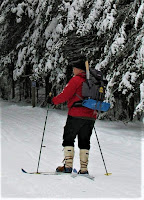
Each
person is affected differently by the cold. Wet and cold can bring hypothermia
on rapidly, or long exposure to the cold, rain, and wind can bring the symptoms
of hypothermia on slowly.
Mild
hypothermia occurs when the core body temperature is between 98.6° and 96°F.
The core temperature for moderate hypothermia is 95° to 93°F. If your
core temperature reaches 92° or below, you are in a life-threatening situation.
This condition will affect your heart rate, blood flow, and ability to think
clearly. Immediate attention is necessary.
Signs
and Symptoms of hypothermia:
In Adults
·
shivering/exhaustion
·
confusion/memory loss
·
drowsiness
·
slurred speech
In
Infants
·
bright red, cold skin
·
very low energy
If
you believe you or someone else is suffering from hypothermia, it is imperative
to get to a warm room or shelter and call for help. While you wait for help to
arrive, remove any wet clothing and warm the center of the victim's body first.
An electric blanket works well if one is available. Skin-to-skin contact under
loose, dry layers of blankets, clothing, towels, or sheets may also be
effective. Drinking warm beverages -- NOT ALCOHOL -- will also help increase
the body temperature. Once the body temperature has increased, keep the victim
dry and wrapped in a warm blanket including the head and neck until help
arrives.
If
the victim is suffering from severe hypothermia, he or she may be unconscious
and may not seem to have a pulse or appear to be breathing. In this case, you
need to handle the victim gently, and get emergency assistance immediately.
Frostbite
It only
takes a few minutes for exposed skin to become frostbitten if the temperature
is below 20 F and the wind is blowing at 20 mph or more.
What is
Frostbite?
When outside
in the cold, your body is focused on maintaining its core temperature. To do
that, it shifts blood away from the extremities and toward the central organs
of the heart and lungs. This increases the risk of local cold injury such as
frostbite to your extremities, particularly the feet and hands, and if
uncovered, the nose, cheeks and ears on the head. We have even treated a case
of frostbite of the corneas of the eyes at one x-c ski race.
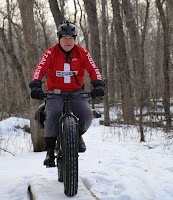
Body tissues
actually freeze when they are frostbitten. Ice crystals form in the cell,
causing physical damage and permanent changes in cell chemistry. When the ice
thaws, additional changes occur and may result in cell death.
If just the
skin surface is affected, it's known as superficial frostbite; deep frostbite
affects underlying tissues.
Preventing
Frostbite
Anyone who
is not dressed properly, is outside for too long, or gets wet in cold weather
can get frostbite. It is easier to prevent frostbite than to treat it.
 Dress for
the weather, not against it. Wear light, layered clothing that
provides ventilation as well as insulation. Wear a water-repellent, breathable shell
on top.
Dress for
the weather, not against it. Wear light, layered clothing that
provides ventilation as well as insulation. Wear a water-repellent, breathable shell
on top.
Protect your
head, hands and feet. COVER ALL EXPOSED SKIN! A number of new face masks
specifically designed for winter athletes have come on the market in recent
years. If you prefer to have your mouth and nostrils uncovered, consider
putting moleskin or Vaseline on susceptible areas. Much of your body's heat
loss occurs through your head and extremities. Helmets specifically designed
for winter sports can protect your ears as well as your noggin, and also help
retain body warmth. Goggles protect the eyes, and are less prone to fog up than
sunglasses. Mittens are warmer than gloves. Wear wool or micro fleece socks and
boots to keep your feet warm. Don't drink or smoke before going out into the
cold. If you plan on being out in the cold for a prolonged period, don't
drink alcohol or smoke. Alcohol and nicotine cause constriction of blood
vessels and leave the skin more prone to thermal injury.
If you get
wet, go inside. Keep your skin dry. Remove wet
clothing as quickly as possible. Check yourself every half-hour or so for signs
of frostbite. If your toes, fingers, ears or other body parts feel numb, get
inside.
Hydrate! Drink plenty of fluids since hydration increases the
blood's volume, which helps prevent frostbite. Adequate hydration helps
sustain circulation
Symptoms
Numbness
Skin feels frozen
Skin appears
waxy, white, or grayish.
Frostbite can
be very serious. If you suspect you have frostbite, seek medical care
immediately.
Sunday, November 21, 2021

CAMBA Global Fat Bike Day Celebration, Saturday, Dec. 4, 2021

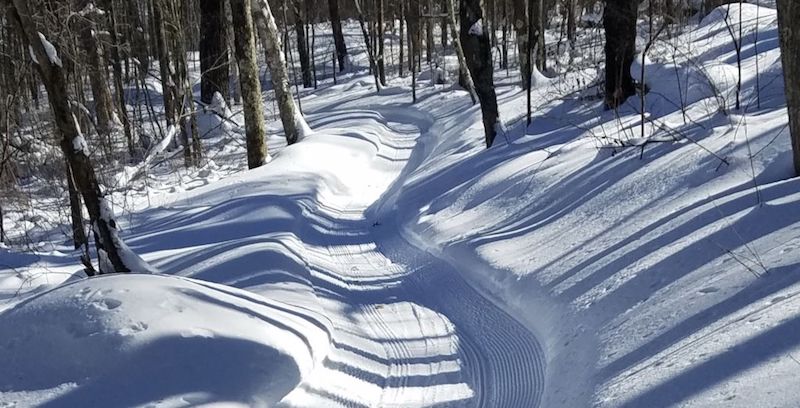
Join us to kick off the winter fat bike
season! We’ll have guided rides for all levels. Following
the ride, enjoy a light lunch with gourmet soup and refreshments. Receive
a pair of wool CAMBA winter-design socks. ALL PROCEEDS go towards
CAMBA’s winter grooming budget. DISCOUNT for CAMBA members!
Location:
CAMBA’s County OO Trailhead, Samuel C. Johnson Outdoor Center
Time:
1 – 4 pm. Rides depart at 1:15pm.
Registration:
The first 50 registrants are guaranteed a pair of CAMBA winter socks. Registration also includes a lunch ticket. All levels are welcome.
CAMBA members: $25 through Nov. 30; $35 through Dec. 4. (Not sure if you’re a current member? Email us at membership@cambatrails.org.)
Non-members: $35 through Nov. 30; $45 through Dec. 4

Tuesday, May 25, 2021
Wilderness Emergency Medical Care; The Case for WFR, Part 1

RAW Medicine Podcast with Todd Pschimelpfenig and Dr. David Johnson, two of the pioneers in Wilderness Medical Training:
A wilderness first responder is trained to deal with many situations that may be encountered in the wilderness. The training is principally geared towards lay providers, with little to no actual medical experience, though they are often already professionals in other aspects of the outdoors industry, like park rangers, climbing instructors, and guides. A standard Department of Transportation defined emergency medical responder (EMR) course, which focuses on urban medical emergencies, requires approximately 60 hours of training, while its backcountry counterpart, wilderness first responder course, typically involves 80 hours of training, covering much of what is taught in an EMR course, but with the additional hours spent putting it in a wilderness context. Wilderness first responder training courses focus on teaching the students to assess a situation, improvise solutions using available resources to stabilize the patient, and identify the best way to get the patient to definitive medical treatment. In many courses, students are encouraged to develop the habit of systematically thinking through and documenting their assessment decisions/plans using a SOAP note. Topics covered usually include, but are not limited to, the following principles:
- basic life support
- responding to results of physical trauma:
- management of signs and symptoms of circulatory shock
- management of soft tissue injury such as a burn or wound
- prevention and/or treatment of blood-borne pathogens
- treatment of infectious diseases
- management of bone and joint injuries such as fractures, sprains, strains and dislocations
- management of suspected head and or spinal injury
- responding to the onset of sudden illness
- transport/evacuation planning and implementation. (Source: Wikipedia)
Subscribe to:
Posts (Atom)
-
 Thanks to the New York State Dept, of Environmental Conservation (and Cabela's) for the suggestion!
 -
 Hypothermia When your body loses heat faster than it can produce it, a situation may occur where all of your body's energy is used up ...
