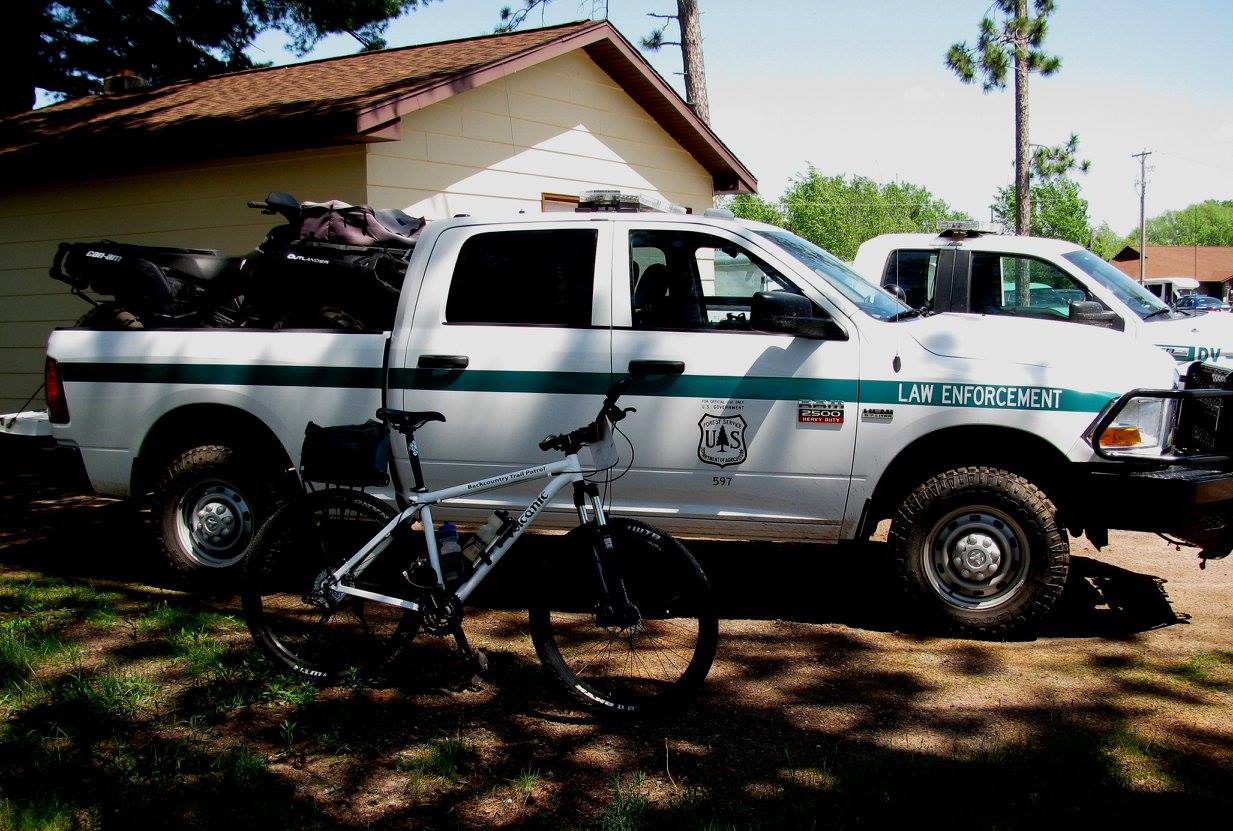
National Police Week
"If a trail is to be blazed, it is "send a ranger." If an animal is floundering in the snow, a ranger is sent to pull him out; if a bear is in the hotel, if a fire threatens a forest, if someone is to be saved, it is "send a ranger." Stephen T. Mather, First Director of the National Park Service
National Police Week
In 1962, President Kennedy proclaimed May 15 as National Peace Officers Memorial Day and the calendar week in which May 15 falls, as National Police Week. Established by a joint resolution of Congress in 1962, National Police Week pays special recognition to those law enforcement officers who have lost their lives in the line of duty for the safety and protection of others. Remembering Michael Staples (USFS, Chippewa N.F.), Kristine Fairbanks (USFS), Jason Crisp (USFS), Margaret Anderson (NPS), Ryan Weltman (NPS, from MN), and Kristopher Eggle (NPS) and all Law Enforcement Officers from all agencies who have given their lives in the line of duty.
The patrol is not law enforcement, but they do work in partnership and communication with the authorized law enforcement agencies and as such are responsible for observing and recognizing any acts that may constitute a potential health hazard to the safety of forest resources and visitors.
When exposed to cold temperatures, your body begins to lose heat faster than it can produce. Prolonged exposure to cold will eventually use up your body’s stored energy, resulting in hypothermia, or abnormally low body temperature.
Body temperature that is too low affects the brain, making the victim unable to think clearly or move well. This makes hypothermia particularly dangerous since a person may not know it is happening and won’t be able to do anything about it.
Hypothermia is most likely at very cold temperatures, but it can occur even at cool temperatures above 40 degrees Fahrenheit if a person becomes chilled from rain, sweat, or submersion in cold water.
Take the person’s temperature. If it is below 95 degrees the situation is an emergency, so get medical attention immediately. If medical care is not available, begin warming the person, as follows:
A person with severe hypothermia may be unconscious and may not seem to have a pulse or to be breathing. CPR should be administered in that case and continue until while the victim is being warmed, until the victim responds or medical aid becomes available. In some cases, hypothermia victims who appear to be dead can be successfully resuscitated.
Source: Forest Service research; National Institutes of Health